Debunking Myths: The Gambler's Fallacy
The Gambler's Fallacy is a common misconception that can affect decision-making and risk assessment in gambling, investing, and everyday life. This psychological phenomenon occurs when an individual wrongly believes that past events can influence the likelihood of something happening in the future in random sequences. For example, if a coin lands heads up nine times in a row, the gambler's fallacy would lead one to believe that there is a greater chance of it landing tails on the tenth flip. However, this is a fallacy because each flip is independent, and the odds remain constant at 50/50.
Understanding the Gambler's Fallacy
.png)
The gambler's fallacy is rooted in the human tendency to see patterns where none exist. Our brains are wired to find order in chaos, which can lead to incorrect assumptions about how random events operate. This fallacy is particularly prevalent in gambling environments but can also manifest in finance, business decision-making, and other areas where outcomes are impacted by random chance.
How to Combat the Gambler's Fallacy
Education on Randomness
One of the most effective approaches to countering the gambler's fallacy is education. By understanding the nature of randomness and how it applies to certain events, individuals can recalibrate their expectations and decision-making processes. For instance, learning about the laws of probability and how they apply to random events like lottery draws or roulette spins can help dispel myths about "due" outcomes.
Advantages:
- Empowers individuals to make more informed decisions.
- Reduces the likelihood of making costly mistakes based on incorrect assumptions.
Disadvantages:
- Requires time and effort to learn and understand complex concepts.
- May not immediately change deeply ingrained beliefs or habits.
Cognitive Behavioral Techniques
Another approach involves using cognitive behavioral techniques to change the thought processes that lead to the gambler's fallacy. This can involve challenging one's own beliefs about randomness and practicing new ways of thinking in controlled environments.
Advantages:
- Provides tools that can be used in various aspects of life, not just in gambling.
- Helps to build resilience against many types of cognitive biases.
Disadvantages:
- Can be difficult to implement without professional guidance.
- Requires consistent practice to be effective.
Practical Examples of the Gambler's Fallacy
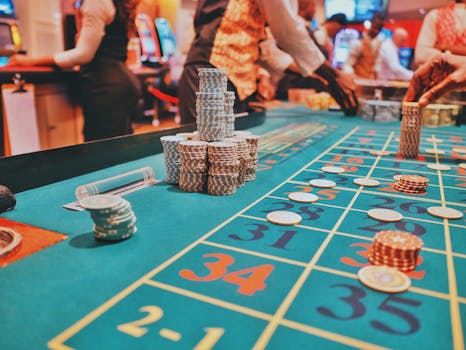
In casinos, the gambler's fallacy might lead someone to bet more money on a roulette number that hasn't come up in a while, mistakenly believing it's "due" to win. Similarly, in the stock market, an investor might misinterpret past stock performance as an indicator of future returns, a potentially costly error.
Case Study: Roulette Betting
Consider a scenario in a casino where a player observes that the ball has landed on black five times consecutively in roulette. Under the influence of the gambler's fallacy, the player might place a disproportionately large bet on red, believing that a red outcome is overdue. Despite the player's conviction, the probability remains the same at each spin: 48.6% for either red or black on a European roulette wheel.
Conclusion: Overcoming the Gambler's Fallacy
The gambler's fallacy is a pervasive and potentially destructive belief that can lead to significant financial losses and poor decision-making. By educating oneself about the true nature of randomness and employing cognitive behavioral strategies to challenge erroneous beliefs, individuals can mitigate the effects of the gambler's fallacy.
It's crucial for gamblers, investors, and anyone who makes decisions based on past events to recognize and correct for this bias. Remember, in the realm of random events, what happened in the past usually has no bearing on what will happen next.
For those looking to deepen their understanding of this topic, numerous online resources and books delve into the intricacies of probability and decision-making psychology, which can provide further insight and practical knowledge to avoid falling prey to the gambler's fallacy.