The Evolution of Gambling: From Ancient Times to Online Casinos
Gambling is almost as old as civilization itself. From the earliest days of rolling dice in Mesopotamia to the sophisticated online casinos of today, the practice of risking something valuable for the chance of reward has been a constant companion to human culture. While the games, technologies, and attitudes have changed dramatically over thousands of years, the thrill of the gamble remains a powerful allure. This article explores the fascinating evolution of gambling, tracing its journey through ancient civilizations, medieval societies, the birth of modern casinos, and into the digital age of online gaming.
Gambling in Antiquity: The Roots of Chance
The earliest archaeological evidence of gambling dates back over 5,000 years. In ancient Mesopotamia (modern-day Iraq), archaeologists have uncovered six-sided dice made from bones, dating to around 3000 BCE. The Ancient Egyptians also played dice games, and some tombs contain board games like Senet, which may have involved elements of chance and betting.
In China, gambling houses were well established as early as 2300 BCE, where rudimentary forms of lottery-type games and betting on animal fights were common. The Chinese are also credited with inventing playing cards by the 9th century CE, which would later become integral to gambling worldwide.
.png)
Meanwhile, the Greeks and Romans embraced gambling in many forms. The Greeks bet on animal fights and athletic contests, while the Romans enjoyed dice games and betting on chariot races. Notably, the Roman emperor Augustus was known for his fondness for gaming, and gambling was a popular pastime during Saturnalia, a festival where social norms were relaxed.
Despite its popularity, gambling was not without controversy. Many ancient societies, including Greece and Rome, periodically outlawed gambling due to concerns about morality and social order. Penalties ranged from fines to corporal punishment, highlighting the tension between gambling’s allure and societal efforts to control it.
The Middle Ages: Gambling in a Changing World
The Middle Ages saw gambling adapt to changing cultural and religious influences. In Europe, dice games and early forms of playing cards were common among all classes, from peasants to royalty. Cards spread from China to Europe via the Islamic world, likely reaching Italy and Spain by the late 14th century.
Gambling during this era was often associated with festivities, fairs, and taverns. However, the Christian Church frequently denounced gambling as sinful, linking it to idleness and vice. Despite religious opposition, gambling persisted, sometimes flourishing in underground circles.
One notable development was the rise of lotteries. The first recorded European lottery with money prizes was held in Bruges, Belgium, in 1441. Lotteries became increasingly popular as a means for governments and towns to raise funds for public projects, such as bridges, roads, and fortifications.
The Birth of Modern Casinos and Legal Regulation
The Renaissance and Enlightenment periods brought significant changes to gambling. The first true casino, the Ridotto, opened in Venice in 1638. This government-sanctioned gambling house was designed to provide a controlled environment for gaming during the annual carnival season and to prevent illegal gambling. The Ridotto featured games like biribi (an early lottery game) and basetta (similar to blackjack).
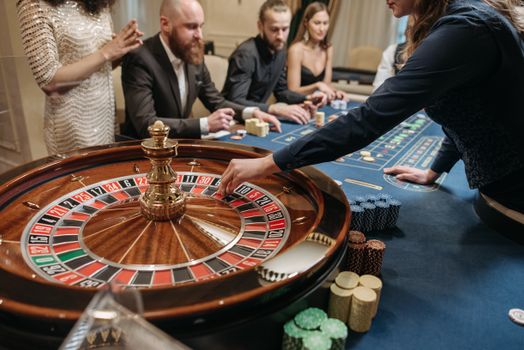
Casinos soon spread across Europe. In France, card games like baccarat and chemin de fer gained popularity, while in Germany, the spa town of Baden-Baden became a gambling hotspot by the 19th century. Roulette, invented in 18th-century France, quickly became a casino staple.
In the United States, gambling evolved with the country's expansion. Riverboat casinos thrived along the Mississippi in the early 19th century, and the Gold Rush of 1849 brought card games like poker and faro to the American West. By the early 20th century, Las Vegas emerged as the global epicenter of casino gambling. Nevada legalized gambling in 1931, and the opening of the Flamingo Hotel in 1946 marked the start of the iconic Las Vegas Strip.
As gambling’s popularity grew, so too did the need for regulation. Governments introduced licensing, age restrictions, and oversight to combat crime and protect consumers. Today, the global legal gambling market was valued at over $465 billion in 2023, according to Statista.
The Digital Revolution: Online Gambling Emerges
The invention of the internet in the late 20th century transformed nearly every aspect of life, including gambling. The first online casino went live in 1994, after Antigua and Barbuda passed the Free Trade & Processing Act, allowing companies to obtain licenses for online gambling operations.
By the early 2000s, the online gambling industry was booming. Poker, sports betting, slots, and live dealer games became accessible from any internet-connected device. In 2022, over 26% of global internet users reported gambling online at least once per month.
The appeal of online gambling lies in its convenience, variety, and accessibility. Players can enjoy thousands of games, often with better odds than brick-and-mortar casinos, from the comfort of their homes. Mobile gaming has further accelerated growth; in 2023, mobile gambling accounted for more than 50% of online gambling revenue worldwide.
However, online gambling also presents new challenges. Concerns about addiction, fraud, and underage gambling have prompted governments to introduce stricter regulations, age verification, and responsible gaming tools.
Key Milestones in the Evolution of Gambling
The history of gambling is marked by pivotal moments and innovations. The following table highlights some of the most significant milestones in the evolution of gambling.
| Year | Event | Significance |
|---|---|---|
| 3000 BCE | First six-sided dice in Mesopotamia | Earliest known evidence of gambling tools |
| 9th century CE | Invention of playing cards in China | Foundation for card games worldwide |
| 1441 | First recorded public lottery in Bruges | Beginning of state-sponsored gambling |
| 1638 | Opening of the Ridotto in Venice | First government-regulated casino |
| 1931 | Legalization of gambling in Nevada | Las Vegas becomes casino capital |
| 1994 | First licensed online casino | Start of the digital gambling era |
| 2023 | Global gambling market exceeds $465 billion | Record highs in industry revenue |
Social Impact and the Future of Gambling
Gambling’s impact on society has always been double-edged. On one hand, it has provided entertainment, social interaction, and economic benefits. For example, lotteries have historically funded public projects, and casinos create jobs and boost tourism. In 2022, the American Gaming Association reported that U.S. commercial casinos contributed more than $261 billion to the economy and supported over 1.8 million jobs.
On the other hand, gambling can lead to addiction and financial hardship. Modern research suggests that around 1-2% of the population in developed countries suffers from problem gambling, with higher risks among young people and online gamblers. This has prompted increased emphasis on responsible gambling initiatives, such as self-exclusion programs and mandatory warning labels.
Looking ahead, the gambling industry is poised for further transformation. The rise of virtual reality (VR) and augmented reality (AR) is expected to create immersive casino experiences. Blockchain technology is also being tested for transparent, decentralized betting platforms. Meanwhile, many countries are revising their gambling laws to better protect consumers in the digital age.
Conclusion
The evolution of gambling is a story of innovation, adaptation, and enduring appeal. From ancient dice games to the dazzling world of online casinos, gambling has woven itself into the fabric of human culture. While technology and regulation have reshaped the industry, the basic thrill of risking for reward remains unchanged. As we look to the future, the challenge will be balancing innovation with responsibility, ensuring that gambling continues to entertain without causing harm. Whether played for fun or fortune, gambling’s journey is far from over—and its next chapter is only beginning.