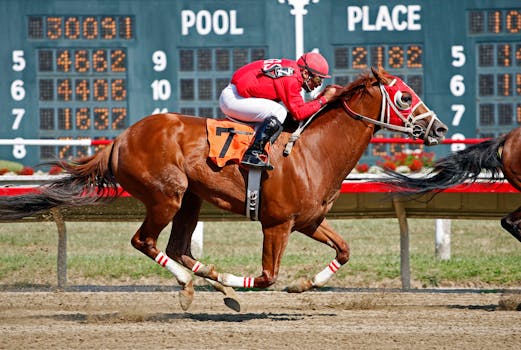
Sports Betting: The Skill Behind the Luck
Sports betting is often painted as a game of pure chance—a roll of the dice, a spin of the wheel, or, in this case, a leap of faith on the outcome of a sporting event. However, beneath the surface of unpredictability lies a fascinating world where skill, analysis, and strategy play critical roles. While luck is undeniably a factor—after all, even the most calculated predictions can be upended by an unexpected injury or a last-second goal—successful sports bettors know that consistent long-term results hinge on more than just fortune. In this article, we’ll peel back the layers of sports betting, exploring the skillsets that separate the savvy bettor from the casual gambler, and examine why, in the world of sports wagering, knowledge truly is power.
The Evolution of Sports Betting: From Guesswork to Data-Driven Decisions
Sports betting has come a long way from the days of handwritten odds and barroom wagers. Today, the global sports betting market is worth an estimated $83.65 billion (Statista, 2023), and technological advancements have transformed it into a sophisticated industry. Modern bettors have access to a wealth of information, from player statistics and injury reports to advanced analytics and live odds feeds.
This data revolution means that betting is no longer about gut feelings alone. For instance, in the English Premier League, data shows that the home team wins about 46% of the time, while away teams win 28%, and the remaining 26% end in draws (Premier League, 2022/23 season). Such statistics offer valuable insight for those willing to dig deeper and crunch the numbers.
.png)
The rise of predictive modeling and machine learning—used by both bookmakers and sharp bettors—has further raised the analytical bar. Today, tools like sports prediction algorithms and value betting calculators allow skilled bettors to spot opportunities where the odds posted by bookmakers may misrepresent the true probability of an event.
Understanding Probability and Value: The Foundation of Skilled Betting
At its core, sports betting is a battle of probabilities. While luck may decide the outcome of a single wager, over time, understanding and exploiting value is what sets skilled bettors apart. But what does “value” mean in betting?
Value is present when the odds offered by a bookmaker suggest a lower probability than you believe is accurate. For example, suppose you assess that a tennis player has a 60% chance of winning a match, but the bookmaker’s odds suggest only a 50% chance. In this case, the bet offers positive expected value.
Let’s break this down numerically:
- If you bet $100 on outcomes with true 60% probability at “even money” (odds of 2.00), your expected return per bet is: - (0.6 x $100) - (0.4 x $100) = $60 - $40 = $20 profit per bet on averageHowever, the skill lies in consistently identifying these mispricings. Bookmakers employ large teams of analysts and powerful algorithms to set their odds, and the market itself is efficient—information is quickly incorporated into prices. Only those who can interpret data better, faster, or more creatively than the masses can consistently capitalize on value.
The Role of Research: Beyond Headlines and Hype
Unskilled bettors often wager based on team loyalty, media narratives, or recent headlines. In contrast, skilled bettors rely on exhaustive research. This includes:
- Statistical analysis: Examining player and team performance metrics such as Expected Goals (xG) in soccer, Player Efficiency Rating (PER) in basketball, or yards per play in football. - Situational factors: Analyzing how a team performs under specific circumstances, such as after a long road trip, in cold weather, or against particular opponents. - Line movement: Tracking how odds shift in response to betting activity, news, and sharp money, which can reveal where professional bettors are placing their wagers.For example, NBA teams playing back-to-back games win just 44.5% of the time compared to their overall win rate (NBA, 2022-2023 season). Recognizing these patterns and adjusting your strategy accordingly is a hallmark of skillful betting.
Bankroll Management: The Unsung Skill in Sports Betting
Even the most skilled bettors cannot eliminate variance—the natural swings of winning and losing. This is where bankroll management comes in. Without it, even the best strategy can be undone by a string of bad luck.
Professional bettors often use the Kelly Criterion or flat betting strategies to manage risk. The Kelly Criterion, for instance, is a mathematical formula that helps determine the optimal bet size based on your edge and bankroll. While not flawless, it helps prevent overbetting and mitigates the risk of ruin.
A real-world example: Suppose you have a $1,000 bankroll and spot a bet with a 55% chance of winning at even odds (2.00). The Kelly formula would suggest betting about 10% of your bankroll, or $100—far less than what many recreational bettors would risk.
Below is a comparison of two common bankroll management strategies:
| Strategy | Description | Risk Level | Recommended For |
|---|---|---|---|
| Flat Betting | Betting the same fixed amount on every wager | Low | Beginners & disciplined bettors |
| Kelly Criterion | Bet size varies based on perceived edge and bankroll size | Moderate | Advanced bettors with accurate probability estimates |
| All-in Betting | Betting entire bankroll on a single wager | Very High | Not recommended |
Sound bankroll management doesn’t guarantee profit, but it does ensure that you stay in the game long enough for your skill and strategy to bear fruit.
Psychology and Discipline: The Human Edge
No matter how sharp your analysis or how refined your model, psychological discipline remains a crucial component of successful sports betting. Emotional decision-making—chasing losses, betting impulsively after a big win, or letting bias cloud judgment—can quickly erode any edge you might have.
A 2021 study published in the Journal of Gambling Studies found that 34% of bettors reported making impulsive bets after a loss, leading to higher overall losses. Skilled bettors cultivate mental resilience, sticking to their strategies and avoiding common pitfalls such as:
- The Gambler’s Fallacy: Believing that past outcomes influence future probabilities (“My team has lost five games in a row—they’re due to win!”) - Overconfidence bias: Overestimating one’s ability to predict outcomes - Recency bias: Giving too much weight to recent events rather than long-term dataThe best bettors treat wagering like an investment, focusing on long-term results and keeping emotion at bay.
Technology, Tools, and the Rise of the “Smart Bettor”
The digital age has democratized access to information and leveled the playing field for individual bettors. Today’s “smart bettor” leverages a suite of tools and technology, including:
- Odds comparison sites: Allowing bettors to shop for the best available odds and maximize potential returns - Automated betting bots: Executing bets based on pre-programmed algorithms or triggers - Sports analytics software: Crunching player and team stats for deeper insights - Community platforms: Sharing and vetting picks with other knowledgeable bettorsFor example, using an odds comparison site can boost returns by up to 5% over time, simply by always taking the best price available. In a game of tight margins, these incremental gains add up.
Moreover, the explosion of data and machine learning models has made it possible for individuals to build their own predictive systems, once the sole domain of bookmakers. The edge now goes to those who can harness technology most effectively.
Conclusion: The Art and Science of Beating the Odds
While luck will always play a role in sports betting—surprise upsets, unpredictable weather, last-minute injuries—the narrative that it’s all chance is a myth. Behind every successful bettor is a blend of skill, discipline, research, and technological savvy. It’s a world where the prepared mind has the greatest chance of succeeding, and where the smartest play is to treat betting as both an art and a science.
If you’re ready to move beyond superstition and gut feeling, embrace the tools and strategies outlined above. Remember: over the long run, skill will always tip the odds in your favor—if you’re willing to put in the work.